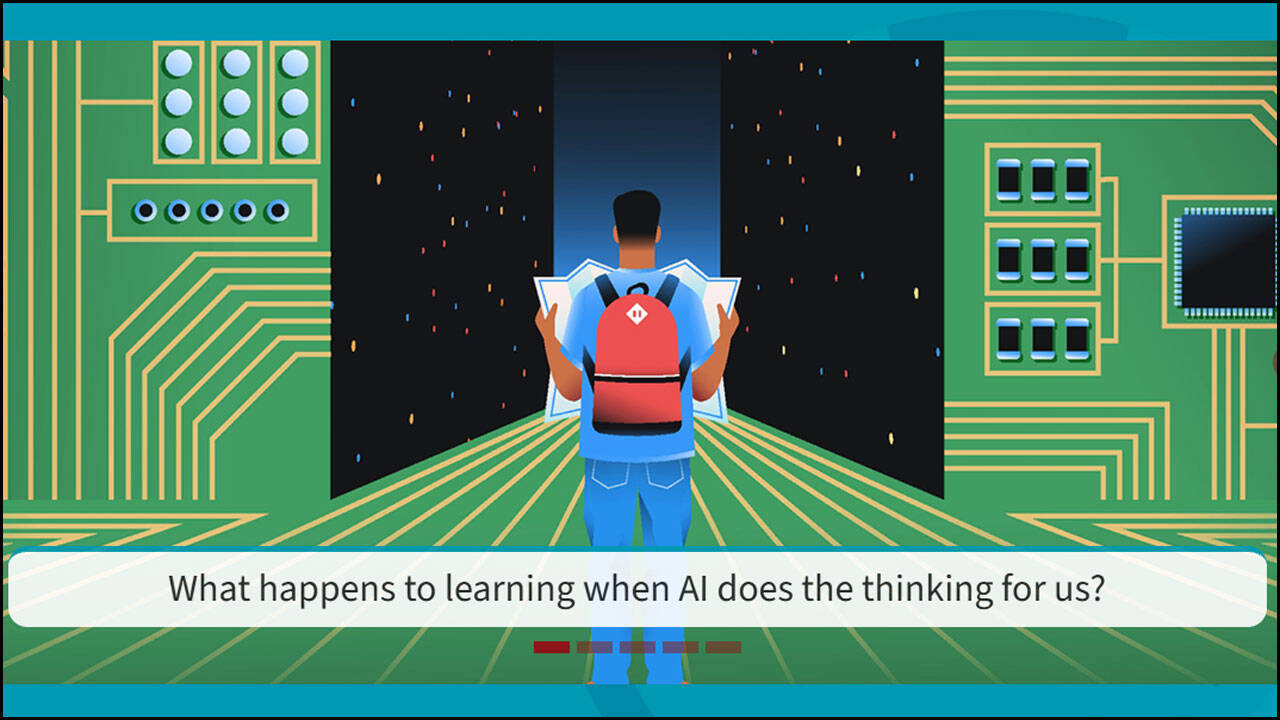
Is AI empowering students or weakening independent thinking?
Times of India

Generative AI offers students unprecedented academic assistance, but educators debate whether it enhances learning or diminishes independent thinking skills.
As generative artificial intelligence becomes widespread in academic life, educators are debating whether the technology aids student learning or fosters dependence on ready-made answers. A 2026 survey by the Higher Education Policy Institute found that 95% of UK undergraduate students have used AI, with 12% directly incorporating AI-generated text into assessed submissions.
Experts hold varied views on the integration of AI in education. Preeti Khatri, a CBSE assistant professor, compares AI to a knife, stating its impact depends entirely on responsible use and pointing to the National Education Policy 2020 and CBSE curricula as proactive steps toward computational thinking.
Conversely, Dr Arpita Srivastava of XLRI warns that students often turn to AI before attempting to understand concepts themselves. Because AI can produce convincing yet flawed outputs, educators stress the need for evolving assessment methods and stronger critical thinking skills to evaluate technology responsibly.
Why it matters: The widespread adoption of generative AI in education forces institutions to rethink assessment methods, classroom behavior, and how to preserve critical thinking among students.