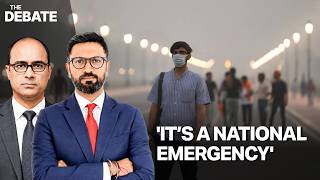
Delhi’s Diwali pollution started before the fireworks
Economic Times
Delhi's air pollution levels began rising ahead of Diwali fireworks.
Explore as a topic
Economic Times
Delhi's air pollution levels began rising ahead of Diwali fireworks.
Explore as a topic
Firstpost
Hindustan Times
Economic Times
LiveMint
NDTV
Times of India

Dipavali, commonly known as Diwali, is the Hindu festival of lights, with variations celebrated in other Indian religions such as Jainism and Sikhism. It is associated with the spiritual victory or triumph of Dharma over Adharma, light over darkness, good over evil, and knowledge over ignorance. Diwali is celebrated during the Hindu lunisolar months of Ashvin and Kārtika – between around mid-October and mid-November. The celebrations generally last five or six days.

Delhi, officially the National Capital Territory (NCT) of Delhi, is a megacity and a union territory of India containing New Delhi, the capital of India. Straddling the Yamuna river, but spread chiefly to the west, or beyond its right bank, Delhi shares borders with the state of Uttar Pradesh in the east and with the state of Haryana in the remaining directions. Delhi became a union territory on 1 November 1956 and the NCT in 1995. The NCT covers an area of 1,484 square kilometres (573 sq mi). According to the 2011 census, Delhi's city proper population was over 11 million, while the NCT's population was about 16.8 million.
The Hindu
The contribution of firecrackers to the city's pollution levels was significantly higher on November 9, a day after Deepavali, before declining on November 11, the IITM models showed
AI comparison of 7 outlets: Times of India, Firstpost, Hindustan Times, The Hindu, LiveMint, Economic Times, NDTV
Number of monitoring stations recording severe pollution levels above 400
Primary focus and angle of post-Diwali coverage