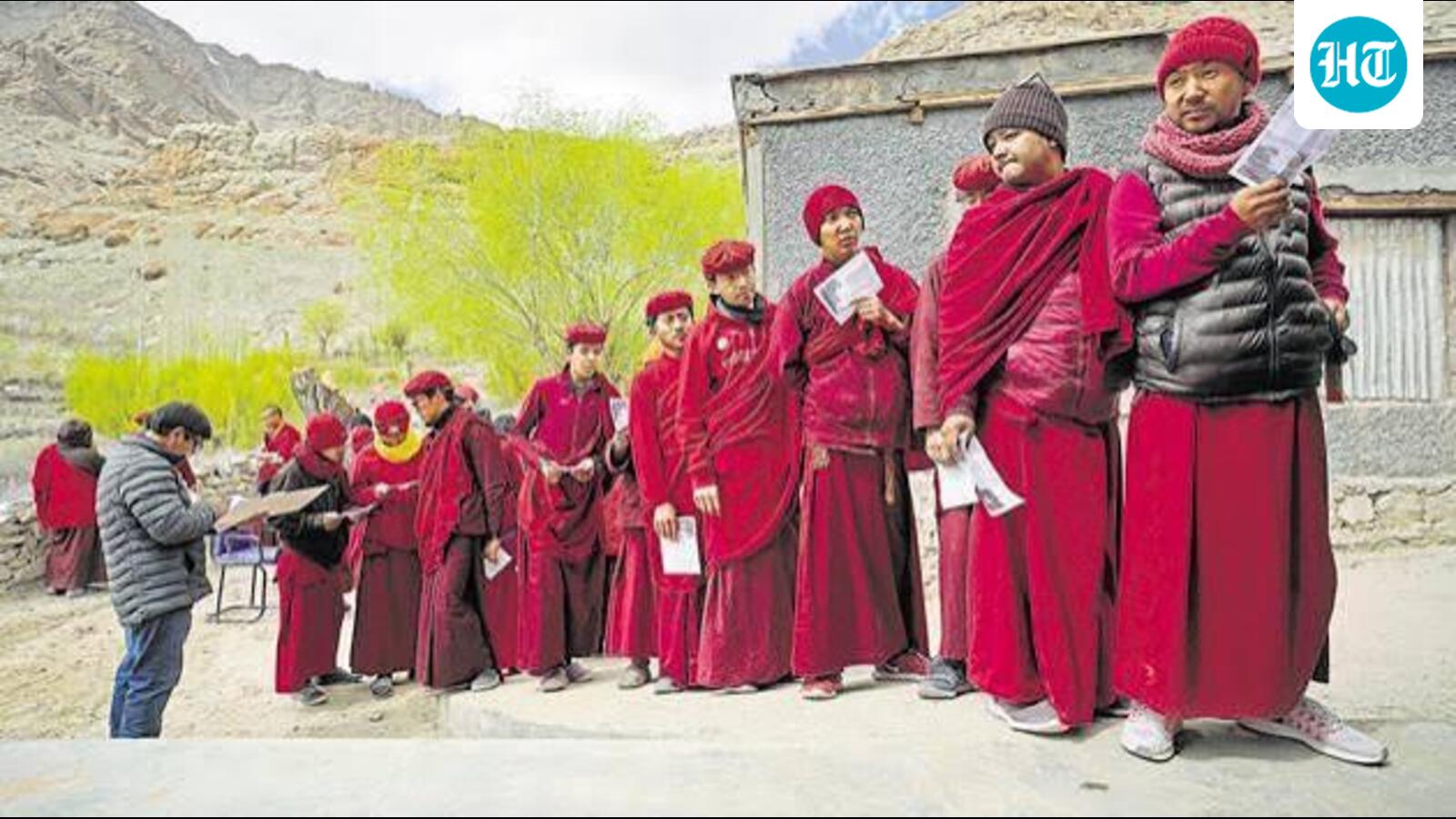
Amid call for Ladakh protest, CEO prohibits dharnas in Leh, Kargil over upcoming polls
The Hindu

The order came a day after Ladakh’s civil society groups announced that
agitations to push a slew of demands would resume on November 12
The Hindu
The order came a day after Ladakh’s civil society groups announced that
agitations to push a slew of demands would resume on November 12
Several outlets reported this. AI can compare where they agree and differ.
Hindustan Times
State election commissioner Sudhanshu Pandey announced the timeline under Rule 12 of the Ladakh Autonomous Hill Development Council (Rules), 2026
Hindustan Times
Wangchuk appeals to President Murmu, alleges smear campaign by Ladakh administration
Hindustan Times
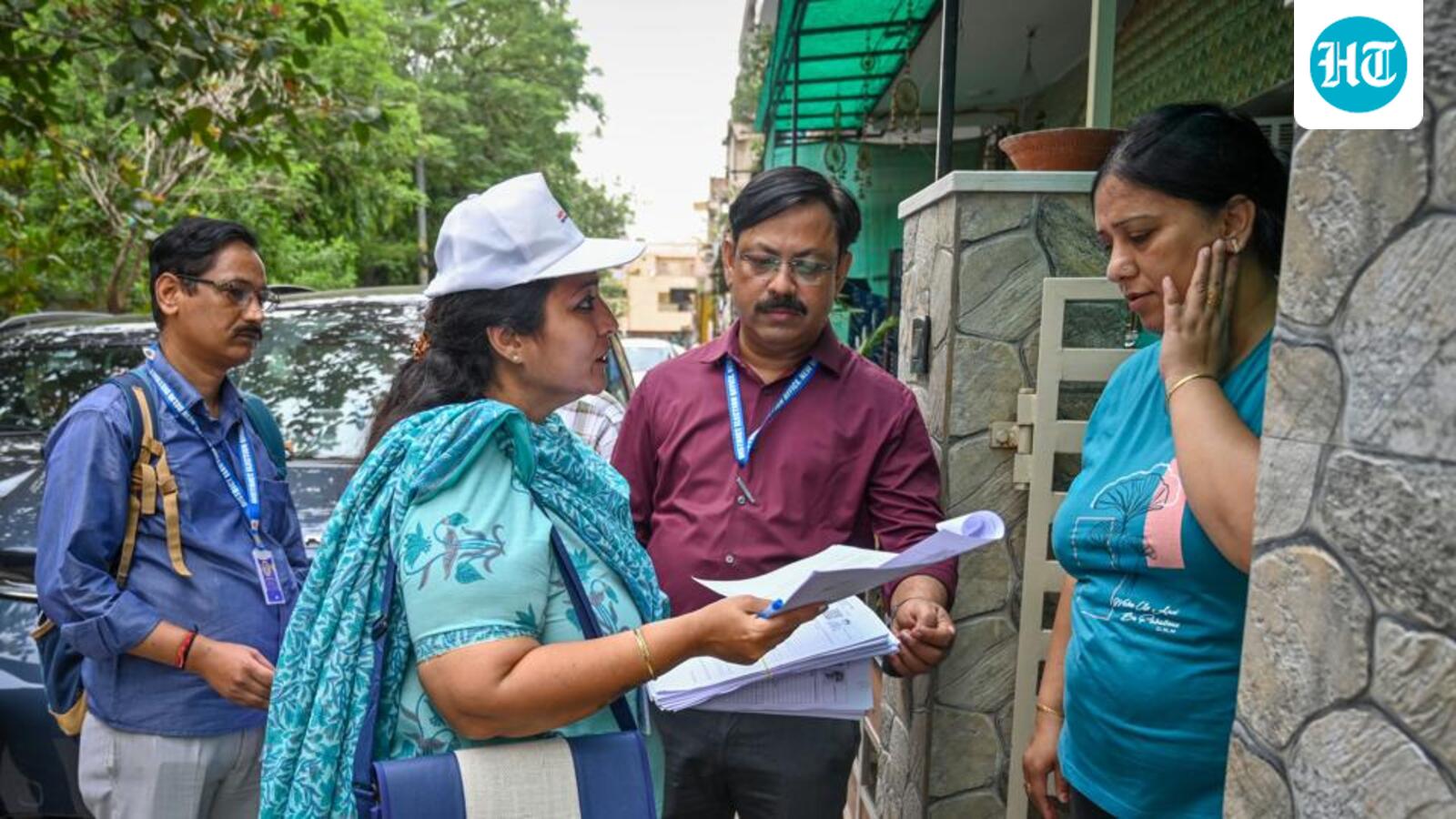
Nearly 4.7 million voters were left out of the draft roll, while the final electoral roll is scheduled to be published on December 22.
Times of India
The Hindu
Hindustan Times
Economic Times
NDTV

Ladakh Buddhist Association (LBA) is an organization in Ladakh, India concerned with interests of Buddhists in Ladakh. It was founded in 1933 by King Jigmet Dadul Namgyal, Kalon Tsewang Rigzin, Lachumir Munshi Sonam Tsewang and Kalon Bankapa Morup Gyaltsan and Pandit Sridhar Koul, also known as Pandit Dulu, after the Glancy Commission failed to provide representation to Ladakhi Buddhists in the newly proposed Praja Sabha. The initiative led to the establishment of the Young Men's Buddhist Association (YMBA) in 1934, which was later renamed as the Ladakh Buddhist Association.

Ladakh is a region administered by India as a union territory and constitutes an eastern portion of the larger Kashmir region that has been the subject of a dispute between India and Pakistan since 1947 and India and China since 1959. Ladakh is bordered by the Tibet Autonomous Region of China to the east, the Indian state of Himachal Pradesh to the south, both the Indian-administered union territory of Jammu and Kashmir and the Pakistani-administered Gilgit-Baltistan to the west, and the southwest corner of Xinjiang across the Karakoram Pass in the far north. It extends from the Siachen Glacier in the Karakoram range to the north to the main Great Himalayas to the south. The eastern end, consisting of the uninhabited Aksai Chin plains, is claimed by the Indian Government as part of Ladakh, but has been under Chinese control since 1962.

West Bengal is a state in the eastern part of India. It is situated along the Bay of Bengal. In 2011, its population was around 91 million in an area of 88,752 km2 (34,267 sq mi), while the population estimate as of 2026 is 100.6 million. West Bengal is the fourth-most populous and thirteenth-largest state by area in India, as well as the eighth-most populous country subdivision of the world. As a part of the Bengal region of the Indian subcontinent, it borders Bangladesh in the east, and Nepal and Bhutan in the north. It also borders the Indian states of Jharkhand, Odisha, Bihar, Sikkim and Assam. The state capital is Kolkata, the third-largest metropolis, and seventh largest city by population in India. West Bengal includes the Darjeeling Himalayan hill region, the Ganges delta, the Rarh region, the coastal Sundarbans and the Bay of Bengal. The state's main ethnic group are the Bengalis.

Bihar is a state in eastern India. It borders Uttar Pradesh to its west, Nepal to the north, the northern part of West Bengal to the east, and Jharkhand to the south. Bihar is split by the river Ganges, which flows from west to east. It is the second largest state by population, the 12th largest by area, and the 14th largest by GDP in 2024. Bihar's official languages are Hindi and Urdu. The main native languages are Maithili, Magahi and Bhojpuri, but there are several other languages being spoken at smaller levels.